
GEO Optimization Best Practices: October 2026 Guide

By Bennett Cohen
Get Maintouch
Turn search and AI visibility work into a repeatable growth system.
Stop optimizing only for the click. SparkToro's 2026 analysis puts it plainly: 68% of Google searches now end without anyone visiting a website. AI answers a growing share of those queries on the page itself, naming specific brands inside the response. If your brand isn't one of them, you don't exist in that moment. The best GEO work in 2026 treats that citation as seriously as a #1 ranking. I'll show you the content structure AI systems prefer, how to build the entity authority they recognize, and what it actually takes to hold citation frequency over time.
TLDR:
- GEO optimizes content to get cited by AI systems (ChatGPT, Google Gemini, AI Overviews, Perplexity, Claude), not just ranked by them.
- #1 rankings get cited 33% of the time. Drop to #10 and that falls to 13%.
- AI prefers content that front-loads stats, quotes, and structured answers in the first 200 words.
- Refresh your best content every 90 days or citation frequency drifts.
- 68% of 2026 Google searches end without a click. Citation tracking is now as important as traffic tracking.
- Maintouch replaces your SEO agency with one system: strategy, content, technical SEO, backlinks, and citation tracking.
I run Maintouch. I spend my days watching how AI systems pull and cite content across the brands we work with, and that direct experience is what this post is written from, not theory or distant observation.
What GEO Is and Why It Matters for 2026
GEO stands for Generative Engine Optimization. Optimizing your content to get cited when AI systems generate answers, not just ranked when humans search.
The shift is bigger than most ranking reports admit. When Google shows an AI Overview, Ahrefs found click-through rates for the top organic position drop 58% versus pages without one. As of February 2026, ChatGPT reaches more than 900 million weekly users. Those users are reading answers that may reference your competitors without ever loading your site.
The goal isn't rankings or clicks. It's citation frequency and brand mentions inside AI-generated responses across ChatGPT, Google Gemini, AI Overviews, Perplexity, and Claude.
On terminology: you'll see this called GEO, AEO (Answer Engine Optimization), or AI SEO. Nobody's agreed on a name yet. I'll use GEO through the rest of this post. The strategies work regardless of which acronym you prefer.
How AI Search Engines Select Content to Cite

AI systems don't process your question the way a search engine does. They run query fan-out first: one query becomes multiple parallel sub-queries before any answer gets written. Ask "best CRM for startups" and the AI is simultaneously searching "CRM pricing 2026," "startup CRM features," and "CRM user reviews" before synthesizing a single response.
That's retrieval augmented generation: the AI pulls from pre-filtered source sets built from search indexes, then writes an answer from what it found. Your content has to make it through two filters: the retrieval pool, then the citation decision.
A 2024 Princeton study on Generative Engine Optimization found pages with structured lists, quotes, and statistics had 30–40% higher visibility in AI responses. The AI is looking for content it can extract and reference cleanly: self-contained paragraphs, direct answers, citable facts with attribution.
Domain authority, backlinks, and ranking position still determine whether your page enters that retrieval pool at all. Traditional SEO gets you to the starting line. GEO is what happens after.
The Unified SEO and GEO Foundation
GEO doesn't replace SEO. It builds on top of it, and the data makes clear why you can't skip the foundation.
Pages ranking #1 get cited 33% of the time. Drop to position #10 and that falls to 13%. Rankings and citations track each other more closely than most people expect.
Traditional SEO gets you into the retrieval pool. Domain authority, backlinks, and keyword targeting determine whether AI systems see your content at all during those parallel sub-queries. Not in the top 20? The AI never considers you.
GEO takes over once you're in the pool. At that point, structure, statistics, and citation-worthy formatting determine whether the AI cites you or your competitor. Keywords get you found. Content quality gets you referenced. For a direct breakdown of how the two disciplines compare, the AEO vs SEO: key differences covers the tradeoffs.
| Optimization Factor | Traditional SEO Approach | GEO Approach | Impact on AI Citations |
|---|---|---|---|
| Primary Goal | Ranking position in search results to drive organic traffic and clicks | Citation frequency in AI-generated responses across ChatGPT, Google Gemini, Google AI Overviews, Perplexity, and Claude | Pages ranking #1 get cited 33% of the time versus 13% at position #10 |
| Content Structure | Keywords in titles, headers, and body text with natural readability for human visitors | Answers in first 200 words, 2-3 sentence paragraphs, question-based headings that mirror search queries | 30-40% higher visibility for pages with structured lists, quotes, and statistics |
| Authority Signals | Domain authority, backlink profile, and ranking metrics measured through search console | Entity authority across unlinked mentions, consistent brand descriptions, and third-party citations | AI systems gain confidence when multiple independent sources report identical entity information |
| Update Frequency | Refresh content when information becomes outdated or rankings decline over months | Update top content every 90 days with fresh stats and recent examples to maintain citation velocity | Content published or refreshed in last 90 days gets cited more frequently than older pages |
| Measurement Metrics | Track rankings, organic traffic, click-through rates, and conversions in Google Analytics | Monitor citation frequency across AI systems, brand mention rate, and citability scores versus competitors | SparkToro's 2026 data shows 68% of searches end without a click, making citation tracking necessary alongside traffic metrics |
Traditional Search vs. LLM Queries: What Drives More Leads in 2026
Traditional search still drives more measurable conversions. When someone clicks through from Google, you get the visit, behavior data, and a clear conversion path. LLM queries skip your site entirely. The prospect sees your brand inside a ChatGPT response, but you don't capture the visitor and you don't control the next step.
That doesn't make GEO worthless. The math is just different. Show up in 30% of ChatGPT answers for your category and prospects start recognizing your name before they ever reach your homepage. That brand familiarity is real, even if it doesn't show up in your analytics.
There's also a query-type advantage. AI users ask longer, more conversational questions: 10+ word queries that signal real buyer intent. Most of these won't appear in keyword tools at all. They're zero-volume searches your prospects are having with AI systems instead of Google, and showing up there matters.
My recommendation: optimize existing content for both. You're already doing SEO work. Adding GEO elements (structured answers, schema, citation-ready formatting) doesn't require separate content. Same pages, formatted for dual visibility. Track them separately: traditional search through GA4 and Search Console, GEO through citation frequency testing across ChatGPT, Perplexity, and AI Overviews. The conversion paths are different enough that you need different metrics.
Where AI Search Stands as of Mid-2026
The numbers have moved fast. BrightEdge data shows AI Overviews appearing on 48% of all tracked queries as of mid-2026 — up 58% year-over-year. Google's AI Mode has 75 million daily active users processing over a billion queries a month. ChatGPT is at roughly 5.35 billion monthly visits and 2.5 billion prompts per day.
Here's where it gets counterintuitive: only about 17% of AI Overview citations come from content ranking in the traditional top 10. Strong rankings get you into the pool, but the AI is pulling from a broader set than your position alone would predict. You can rank #3 and still not get cited.
The budgets are following the behavior. Conductor's early 2026 research found 32% of digital marketing leaders now rank GEO as their top priority. McKinsey puts 44% of AI-powered search users considering AI their primary research source, versus 31% still on traditional search.
The business case is direct: brands cited in AI Overviews earn 35% more organic clicks and 91% more paid clicks than those left out. Citation isn't a brand awareness play — it feeds your entire funnel.
Content Structure That AI Systems Prefer
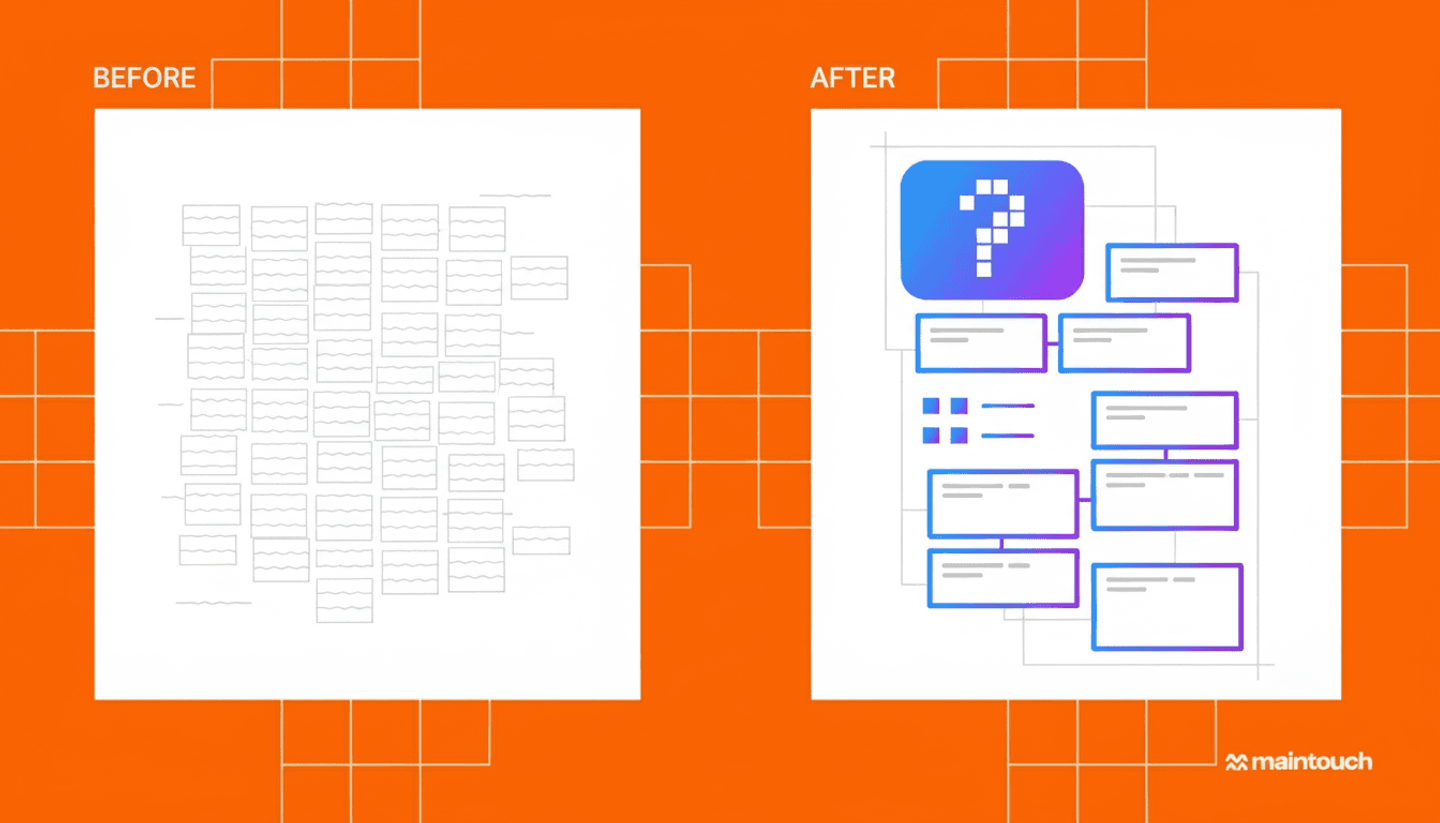
In my experience working with hundreds of companies, AI systems pull facts from the first 200 words. State your answer immediately — not after three paragraphs of context-setting. The AI isn't reading for narrative arc. It's scanning for extractable facts.
Every paragraph should work as a standalone citation. If an AI can't pull a complete answer from a single paragraph without reading what's before or after it, rewrite it. Two to three sentences max. Short chunks are readable and extractable.
Structure Headings Around Questions
Replace creative headers with explicit questions. "Why Does Entity Authority Matter for Citations?" beats "The Power of Authority" every time. Your H2s and H3s should read like natural queries — AI systems match headings against sub-queries during retrieval, so the closer your heading mirrors the question, the better your chances of getting pulled.
Schema Markup and Structured Data for AI Visibility
Schema markup is the translation layer between your content and the AI. Without it, the AI has to infer what your content represents from plain text — which introduces errors and increases the chance it skips you during retrieval.
Start with four types. Organization schema defines your company. Person schema validates author credentials. Product schema describes your offerings. FAQPage schema flags Q&A content as worth citing — especially important if you're targeting citations in AI Overviews, where that signal carries real weight.
For implementation, JSON-LD is the cleaner approach — it keeps structured data separate from your HTML and easier to maintain. Connect entities through @id properties and link outward to Wikidata and Wikipedia using sameAs to disambiguate your brand and build trust signals with the AI.
Building Entity Authority Across the Web
AI systems treat your brand as a distinct entity with specific attributes and relationships. The more consistently those attributes appear across independent sources, the more confident the AI becomes in citing you. Build that confidence by working three levers:
- Consistency across properties. Keep brand descriptions, service definitions, and leadership info identical across Google Business Profile, LinkedIn, Crunchbase, industry directories, Wikipedia, and review sites. Conflicting descriptions confuse entity resolution.
- Unlinked brand mentions. When industry publications, reports, or podcasts name your brand without a hyperlink, AI systems register that signal just like a backlink. Coverage counts even when it doesn't link.
- Repetition across independent sources. The more unrelated outlets report the same core facts about your company, the more weight those facts carry in retrieval. Consistency matters beyond human readers: it's the signal AI systems use to verify entity data.
Content Freshness and Update Velocity
AI systems prefer newer content. Pages refreshed in the last 90 days get cited more often than older ones — even when the underlying information hasn't changed. Freshness is a signal in its own right.
You can't publish once and walk away. Open your top pages every quarter: swap in fresh stats, update the examples, add recent developments, and update the publish date in metadata so the refresh actually registers with crawlers.
Submit indexing requests immediately after every update. Don't wait for the next crawl cycle. AI crawlers work like search crawlers — faster indexing means faster citation potential.
Domain authority sets the timeline. Strong sites with clean technical setup and proper schema get cited within days of publishing. Newer sites take longer. Build citation velocity through consistent publishing over months, not random content bursts. I've seen the burst-and-fade pattern fail repeatedly.
Statistics, Quotes, and Citation-Worthy Elements
AI systems cite content that's packaged for extraction. Four elements that reliably get picked up:
Numbers with sources. "73% of B2B buyers research independently before contacting sales (Gartner, 2024)" gets cited. "Most buyers research independently" doesn't. The source and year are what make it citable — without them, the AI has nothing to attribute.
Expert quotes with full attribution. "According to [Name], [Title] at [Company]" gives the AI enough context to cite cleanly. Anonymous quotes get skipped.
Definitions near the top of the page. "Entity authority is how AI systems recognize and trust your brand across multiple sources." That's a complete, self-contained answer — exactly what the AI is looking for.
Tables for comparisons. Feature breakdowns, pricing charts, and spec comparisons all drive citations when structured with proper table markup and thead elements. Prose comparisons rarely get extracted. Tables do.
Measuring GEO Performance and Citation Tracking
Google Analytics won't show you when ChatGPT recommends your competitor instead of you. Zero-click answers leave no trail in standard tracking. LLM visibility tracking is a separate discipline entirely, and most teams aren't running it.
Start with citation frequency testing. Build a list of 20 queries your customers actually ask, then run each one five times across ChatGPT, Perplexity, Gemini, and Google AI Overviews. Average the results — AI responses are probabilistic, so single tests mislead. Record which brands appear, where they fall in the response, and what context surrounds each mention. I've written a full walkthrough on getting cited in ChatGPT responses if you want the platform-specific detail.
Then benchmark against competitors. If you appear in 6 out of 10 responses and your competitor shows up in 8, you're at 60% versus their 80%, and you know exactly where to focus. Track that gap over time, not a single snapshot.
Also check whether AI systems describe your brand correctly. Wrong category associations or outdated product descriptions signal entity authority problems. That's not a content issue — it's a structured data and consistency issue, and it's fixable.
Scaling GEO with Automation and Systems
Running GEO manually breaks down around 50 pages. You can't refresh content quarterly, maintain schema across hundreds of posts, and run keyword research on top of your actual job. At some point, execution has to be systematized.
I built Maintouch to handle that execution layer. The system replaces your SEO and AEO agency — strategy, content, technical SEO, backlinks, and citation tracking in one place. Every paying account gets a dedicated strategist who runs weekly standing syncs and has a dedicated Slack channel for ongoing alignment, while agents handle the execution work.
On content: Maintouch pulls what ChatGPT, Gemini, Perplexity, and AI Overviews actually cite, studies the top-ranking pages in those results, and structures your draft for extraction from the start. When you update your knowledge base, it flags outdated content automatically. Technical fixes and internal linking run through CMS integrations without manual work.
Pricing is scoped to your situation, so reach out for a number. But it's well below the $3,000-$10,000/month retainers traditional agencies charge for the same execution scope, and turns ROI-positive for most B2B companies after a single new customer.
Final Thoughts on Preparing Content for AI Systems
Rankings still matter: they decide whether AI systems see your content at all. GEO decides what happens after that. Domain authority gets you into the pool. Content structure gets you cited inside the answer. Those are two different problems, and conflating them is why most content teams are frustrated right now.
If I were starting today: map where your brand appears in AI answers right now, then work backward from the pages your top-cited competitors are running. Stats in the first 200 words. FAQ and Organization schema. Two-to-three sentence paragraphs. Question-based H2s. That's the playbook.
I run Maintouch. I spend my days watching this play out across hundreds of companies, and I can tell you clearly what's working and what isn't. If you want to talk through what citation optimization would look like on your content, shoot me a message at [email protected].
FAQ
How long does it take to see results from GEO optimization?
Citation velocity depends on your domain authority and update frequency. Strong domains with clean technical setup see AI citations within days after publishing or updating content. Newer sites take longer. Expect to build citation frequency over months through consistent publishing, not random content bursts.
What's the difference between ranking #1 in Google and getting cited by ChatGPT?
Ranking gets you into the retrieval pool where AI systems can find you. Citation happens when the AI chooses to reference you over competitors in that pool. You need traditional SEO fundamentals (domain authority, backlinks, keywords) to be found, then GEO optimization (structure, statistics, citation-worthy formatting) to be referenced.
Should I update old content or just focus on publishing new articles?
Update your best-performing content every 90 days. Content published or refreshed in the last three months gets cited more often, even when the information stays accurate. Open your top pieces, swap in fresh stats, add recent developments, and change your publish date in metadata to signal the refresh.
How do I know if my content is actually getting cited by AI systems?
Run your target queries across ChatGPT, Perplexity, Gemini, and Google AI Overviews manually. Test the same 20 queries your customers actually ask five times across each tool, then average the results. Track your mention rate against competitors to identify gaps - if you show up in 6 out of 10 responses and they appear in 8, you're at 60% versus their 80%.
Can I optimize for GEO without changing my entire content strategy?
GEO builds on your existing SEO work, not replaces it. Start by restructuring your top 10 pages: move key facts to the first 200 words, break paragraphs into 2-3 sentence chunks, and turn creative headers into explicit questions. Add schema markup for FAQ and Organization types. The content topics stay the same; you're just reformatting for AI extraction.
Does GEO work for B2B companies, or is it mainly a B2C play?
GEO is actually more impactful for B2B than B2C. B2B buyers increasingly use ChatGPT, Perplexity, and Google AI Overviews to research vendors and shortlist options before ever contacting sales, and those are the responses you need to appear in. Long-form, high-intent queries like "best CRM for Series A startups" or "how to choose an enterprise data warehouse" are exactly the kind of conversational questions AI engines field and answer with cited sources.
What's the difference between GEO, AEO, and AI SEO — are they all the same thing?
They describe the same discipline: optimizing content so AI systems cite you when they generate answers. The industry hasn't settled on a standard name yet. You'll see GEO (Generative Engine Optimization), AEO (Answer Engine Optimization), and AI SEO used interchangeably across different tools and publications. The strategies work the same regardless of which term you use. Pick one and move on.
Do I need schema markup to get cited in AI Overviews?
Schema is effectively a binary qualifier. Without it, AI systems have to infer what your content represents from plain text alone, which increases the chance they skip you during retrieval. With it, you're giving the AI a structured signal it can read without guesswork. FAQPage and Organization schema are the two highest-impact types to implement first: they directly match the content formats AI engines prefer to cite.
Which AI platforms should I focus on for citation optimization?
Start with Google AI Overviews: it has the most direct impact on organic traffic and the largest query volume of any AI search surface. Then add ChatGPT and Perplexity, which together account for the bulk of AI-native research queries. Claude is growing fast and worth tracking. The core content structure and schema work that earns citations on one platform carries over to all of them. You're not maintaining separate strategies per engine.
Can a newer site with low domain authority get cited by AI systems?
It's harder, but not impossible. AI systems lean on the same retrieval pools as traditional search, so low domain authority limits which pages enter consideration. That said, well-structured content with clear schema and self-contained answers can punch above its weight, especially on niche queries where authoritative pages don't exist. Build domain authority in parallel: consistent publishing, backlinks, and technical SEO all accelerate citation velocity over time.
How is GEO performance different from tracking regular SEO metrics?
Traditional SEO metrics (rankings, organic traffic, CTR) measure what happened after a user clicked through to your site. GEO performance measures whether your brand appeared in an AI-generated answer at all, regardless of whether anyone clicked. You're tracking citation frequency and brand mention rate across ChatGPT, Perplexity, Gemini, and Google AI Overviews. The conversion path is different too: someone sees your brand in an AI response, forms an impression, and may search for you directly later. None of which shows up in Google Analytics.
Is GEO optimization a one-time project or ongoing work?
Ongoing, without question. The initial pass (restructuring pages, adding schema, moving answers to the first 200 words) is a one-time foundation. Maintaining citation frequency requires updating your top content every 90 days with fresh stats and recent examples, submitting indexing requests after every update, and monitoring whether AI systems still describe your brand correctly. Citation rates drift as competitors update their content and AI engines shift their retrieval preferences. The sites that hold citations over time treat GEO as a continuous operation, not a launch project.

About the author
Bennett Cohen
CEO and Founder at Maintouch
Turn search into your best growth channel.
Maintouch tracks your visibility across AI and Google, creates and refreshes content, and gets your brand mentioned on the sites that shape discovery.
Book a demoRelated reading
All posts